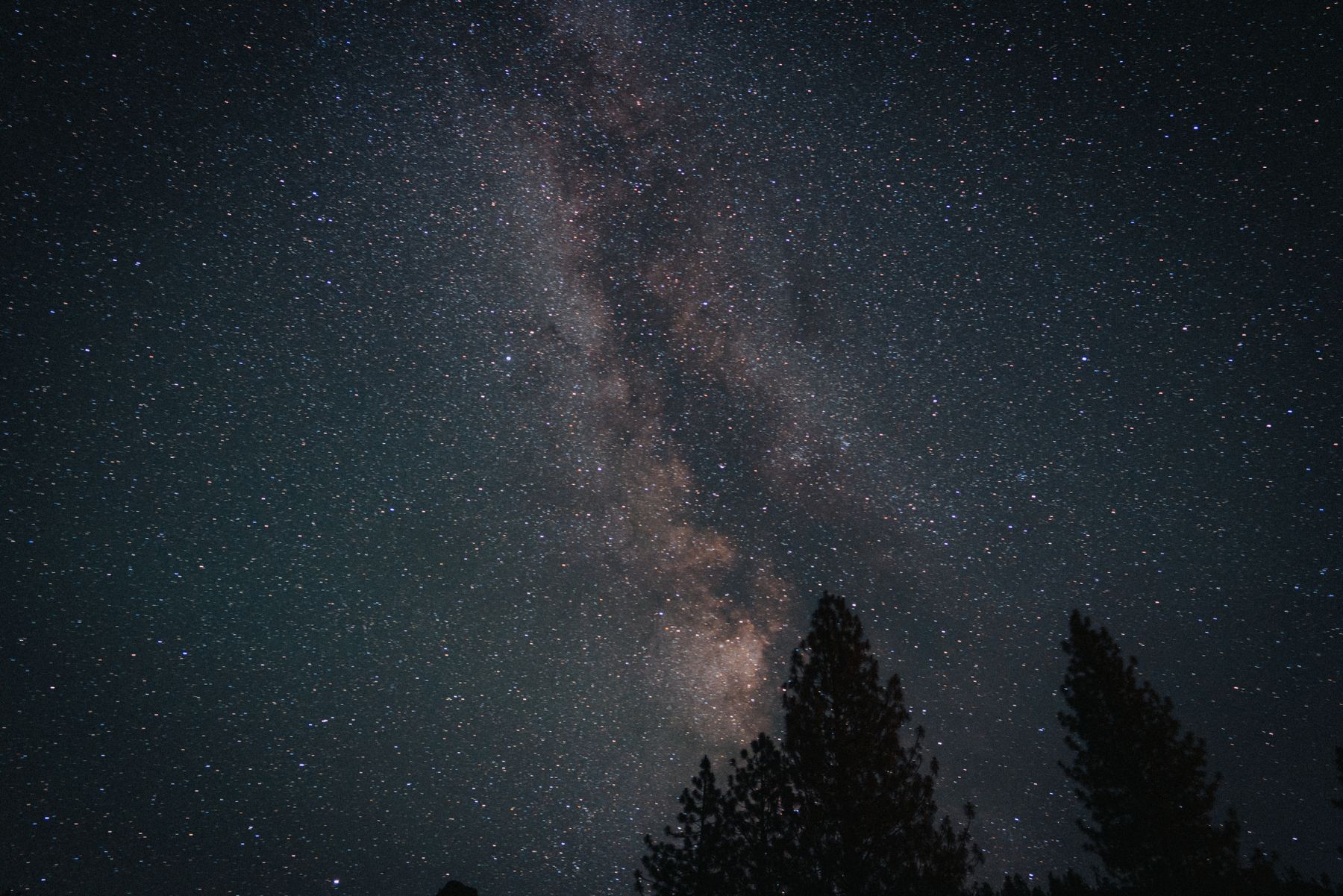
Great Basin National Park: the darkest sky in the lower 48
Great Basin National Park, east of Ely off US-50 and US-6, holds some of the darkest measured skies in the contiguous United States — the Park Service runs astronomy programmes at the Lehman Caves visitor centre in summer, with telescopes set up after dark. From Las Vegas it is roughly 300 miles and about four and a half hours via Interstate 15 and US-93; from Reno it is closer to five hours. The park's high elevation means night temperatures can fall close to freezing even in July. Book lodging in Baker or Ely well ahead for summer weekends, and keep a full tank before the final approach.
Camping at the park's developed campgrounds is the simplest option if you want the sky overhead all night, but the elevation and thin bedding make the motels in Ely the more comfortable base — roughly an hour's drive back and forth on a paved road. Late spring and early autumn give the best balance of clear skies and bearable temperatures; midsummer brings monsoon cloud that can wipe out a whole evening. If the moon is more than half full, plan around it: the Milky Way is faint until moonset. I would book Ely for a two-night stay and treat the park as a full evening out.
Rhyolite and the Amargosa Valley: ghost-town skies near Death Valley
The ruins of Rhyolite sit just outside Beatty on State Route 374, about two hours from Las Vegas through Death Valley Junction or over the Spring Mountains via Pahrump. The old bank building and Bottle House stand against open desert with almost no light pollution to the east, and the drive from Beatty takes under ten minutes. Do not walk the ruins after dark without a torch — the ground is uneven and there are open shafts nearby. The Amargosa Valley and Death Valley Junction area offers another dark corridor along SR-127, with wide horizons toward the Funeral Mountains.
Beatty is the practical base: a small town on US-95 with motels and a handful of diners, roughly 115 miles from Las Vegas. Pahrump, an hour further south, has more rooms and services but sits closer to the light dome of the Las Vegas valley. Spring and autumn are the seasons to aim for; July and August afternoons regularly push past 40°C, so stargazing means waiting until well after dark for the heat to ease. Between the two I would choose Beatty for a sky-focused night and Pahrump for a longer stay with daytime plans.
North Las Vegas and the Mojave edge: dark sky without a long drive
You do not have to cross the state for a good sky. North Las Vegas sits at the northern rim of the valley, and the desert opens up quickly along Interstate 15 toward Apex and the Valley of Fire turnoff. The further north and east you drive from the city grid, the faster the glow fades — the area around the Las Vegas Paiute Golf Resort and the upper Las Vegas Wash gives noticeably darker horizons than the Strip. Valley of Fire State Park, about an hour northeast via I-15 and State Route 169, closes at sunset in most seasons, so plan your viewing from the roadside pullouts rather than inside the park.
North Las Vegas is the sensible base for this kind of night: hotels there cost less than comparable Strip rooms, parking is simpler, and you are already on the right side of the valley for a late return. Spring and autumn evenings are comfortable; summer nights stay above 30°C well after dark, which is worth knowing before you commit to a long session outside. This is not true dark-sky territory — you will see the Milky Way, but not the depth of detail you get at Great Basin. I would book it for a first or last night of a trip, not as the centrepiece.
Las Vegas as a stargazing base
Las Vegas works as a hub rather than a viewing site. From a hotel near the Spaghetti Bowl or downtown, you can reach the Rhyolite turnoff in about two hours, the Valley of Fire area in an hour, and Great Basin in a long day's drive. Rooms in the city are plentiful and often cheaper midweek than at weekends, which matters if you are using it as a launchpad for several nights out. The trade-off is the light dome: you will drive at least 45 minutes from most Strip hotels before the sky darkens properly.
For a trip built around the night sky, I would split the stay: two nights in Las Vegas at the start for supplies and a Valley of Fire evening, then two nights in Ely for Great Basin, and a night in Beatty if Rhyolite appeals. Check moon phase before you fix dates, and pack layers regardless of season — desert nights cool fast. Skip the Strip observation decks as a stargazing option; the views are of the city, not the sky.
Good to know
Questions, answered
When is the best time of year to stargaze in Nevada?
Late spring and early autumn give the clearest skies and the most comfortable night temperatures. Midsummer brings monsoon cloud to eastern Nevada, and winter closes some high-elevation access, though Great Basin's clear cold nights can be excellent if you dress for freezing conditions.
Do I need a tour or guide to see dark skies in Nevada?
No. All the sites here are reachable by paved road and can be visited independently. Great Basin National Park runs free astronomy programmes in summer, which are worth timing a visit around, but you can view from the park's pullouts on any clear night.
How far do I need to drive from Las Vegas for a dark sky?
Roughly 45 to 60 minutes north toward Valley of Fire or west toward Pahrump gets you a noticeably darker sky. For genuinely dark skies, plan on two hours to Rhyolite outside Beatty or about four and a half hours to Great Basin National Park near Ely.
Doing good is the business: every booking through Stay Nevada funds one verified tonne of carbon removal — same room, same price, no markup.
Search stays